
Yes, Suboxone does block the effects of tramadol. If you are taking Suboxone for opioid use disorder (OUD) and you take tramadol, you won’t experience the desired effects like euphoria. In this way, Suboxone does block opioids like tramadol.
The only time that you should take tramadol with Suboxone is if your doctor prescribes it in the short term to manage pain. This is because Suboxone, despite containing buprenorphine, a partial opioid agonist, usually does not effectively manage pain.
Technically, you can take tramadol with Suboxone if a doctor prescribes it and has deemed it a safe way to manage your pain. However, you should never misuse tramadol while taking Suboxone or take it for pain without a prescription.
If you take tramadol with Suboxone here are the possible consequences:
That said, tramadol is considered a weak opioid, so it is less likely to cause severe precipitated withdrawal than potent opioids like fentanyl or heroin. [1],[2],[3]
However, if you are dependent on or addicted to tramadol and want to take Suboxone to help you quit, you should consult with a doctor about the appropriate timeline for your first dose. You should already be in tramadol withdrawal before taking your Suboxone.
Because Suboxone (buprenorphine/naloxone) blocks the effects of other opioids like tramadol, you won’t experience euphoria or feelings of pleasure if you misuse tramadol. [4]
In this way, Suboxone, in addition to reducing opioid withdrawal symptoms and cravings, also serves as an opioid misuse deterrent. If you attempt to get high on other opioids like tramadol while taking Suboxone and you don’t experience the desired effects, you may be less likely to misuse opioids in the future.
Suboxone contains buprenorphine, a partial opioid agonist, and naloxone, an opioid antagonist. Buprenorphine has a high affinity for the mu-opioid receptors in the brain, occupying them and keeping opioid withdrawal symptoms and cravings at bay. [4]
Buprenorphine also displaces other opioids like tramadol from the receptor site, which is how it blocks the euphoric effects of opioids like tramadol. If you use tramadol, the buprenorphine kicks it off the receptor so it can’t bind and cause a high. [4]
If you take Suboxone too soon after taking tramadol, you may experience precipitated withdrawal symptoms, such as: [5]
However, because tramadol is a weak opioid, it is less likely to precipitate severe withdrawal than more potent opioids like heroin, fentanyl, or oxycodone—but the risk is still present.
If you are misusing tramadol and want to begin Suboxone therapy, talk to your doctor about when to take your initiation dose so that you don’t experience precipitated withdrawal.
Ideally, you should stop taking tramadol at least 24 hours before you begin taking Suboxone.[6] This will prevent precipitated withdrawal.
If you have severe pain due to a surgical procedure or injury, your doctor may prescribe tramadol to manage your pain while on Suboxone for OUD. [7] Because of buprenorphine’s mechanism of action, it typically doesn’t provide adequate pain relief. [8] That’s where tramadol or another opioid medication may be able to help.
Research has indicated that short-term use of opioids like tramadol can help treat acute pain even when someone is taking Suboxone or other forms of buprenorphine.
And while previously, medical professionals thought it was best for the patient to temporarily stop taking their Suboxone while taking an opioid painkiller for severe pain, the current recommendation is to maintain the current Suboxone dose and add the tramadol or other medication if necessary. [8]
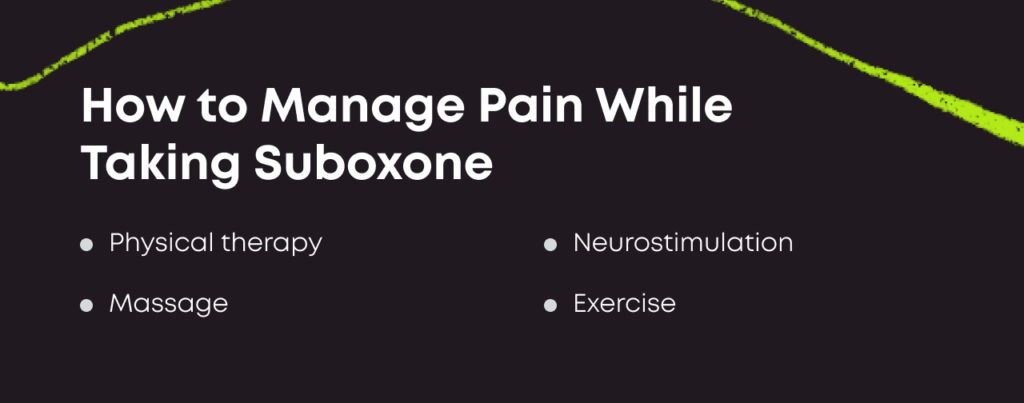
If you have chronic pain, talk to your doctor about non-opioid methods for managing it. Tramadol and other opioid medications are not the ideal choice for long-term pain management in people with opioid use disorder who are taking Suboxone.
Non-narcotic medications like acetaminophen or ibuprofen may be appropriate for you, and a treatment plan should be developed with your healthcare provider. The ideal medications for addressing pain while you take Suboxone may depend on the source of the pain.
Your treatment team may suggest other ways to manage pain that don’t involve medication, such as:[9]
You may also be able to utilize topical treatments, such as lidocaine patches or other numbing creams or gels.
Peter Manza, PhD received his BA in Psychology and Biology from the University of Rochester and his PhD in Integrative Neuroscience at Stony Brook University. He is currently working as a research scientist in Washington, DC. His research focuses on the role of the brain dopamine system in substance use disorders and in aging. He also studies brain function in obesity and eating disorders.
Our science-backed approach boasts 95% of patients reporting no withdrawal symptoms at 7 days. We can help you achieve easier days and a happier future.
Get Startedor book an enrollment call


