
Suboxone is a safe and effective medication doctors use to treat opioid use disorder (OUD). Like most medications, Suboxone can cause side effects. Understanding what they are can help you know what to expect when you start this important sobriety treatment.
Suboxone is a prescription medication. The U.S. Food and Drug Administration (FDA) approved it to treat opioid dependence.[1]
Suboxone contains the following two active ingredients:[1]
The FDA says Suboxone works best when provided alongside other OUD treatments.[1] Counseling, education and therapy can help people build up sobriety skills, while Suboxone eases relapse risks.
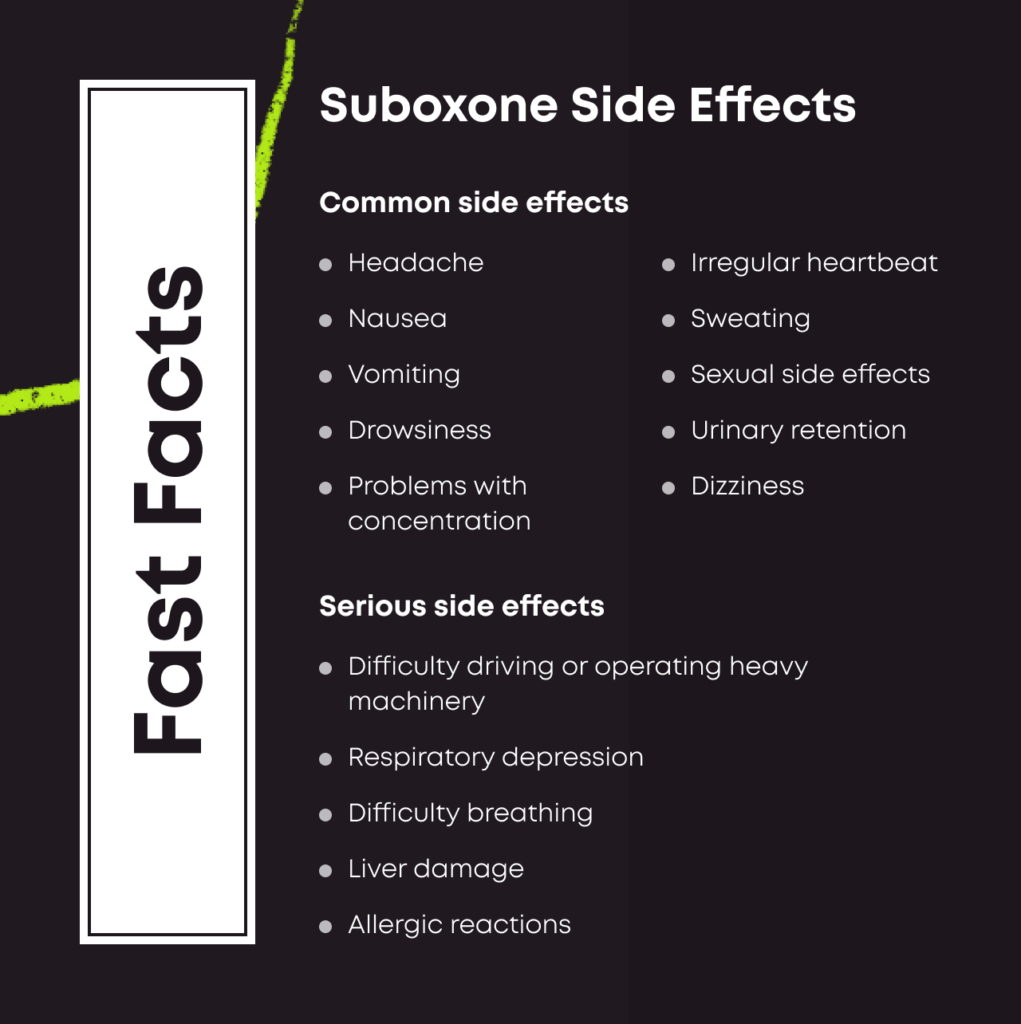
Suboxone’s side effects vary from mild and common to severe and rare. Your doctor should explain these symptoms to you before your treatment begins. Here’s what you should know:
The FDA says the following side effects are often seen in people using Suboxone:[1]
While Suboxone is a safe and effective medication, it can cause severe and unusual reactions in some people. The FDA says the following side effects have been reported in people taking Suboxone:[1]
Contact your doctor immediately if any of these side effects occur.
Suboxone is designed to block opioids. Take it too early, and it could kick active drugs off their receptors. Intense withdrawal symptoms can begin, such as nausea, vomiting, muscle aches and anxiety.
Your risk of precipitated withdrawal is higher depending on a few factors:[2]
Following your doctor’s instructions carefully before taking your first dose of Suboxone is the best way to avoid precipitated withdrawal.
Anyone can develop side effects due to their prescription use, but some factors could raise your risk.
You’re more likely to experience Suboxone side effects due to the following:[1]
You’re not required to endure side effects from Suboxone doses. Taking a few basic steps can help to reduce your risk of experiencing severe side effects.
The following tips can help:[1]
If you stop Suboxone treatment cold turkey, you can experience withdrawal symptoms. The buprenorphine component inside your medication is an opioid. Quit too quickly, and your brain cells can overreact with physical and mental symptoms.

Opioid withdrawal symptoms are often described as flu-like. They can include the following:[3]
Suboxone withdrawal can last between 10 and 20 days.[4] How long your issues last depends on factors like your health, dependence on opioids, and personal addiction history.[2,3]
Time FrameSymptoms8–24 hoursEarly symptoms like agitation, anxiety, aching muscles, and insomnia begin. 4–10 daysLate symptoms like nausea, abdominal cramping, diarrhea, and vomiting start. Day 11 onwardSymptoms begin to fade. But cravings and poor mental health can persist.
We’ve compiled some of the most frequently asked questions about Suboxone side effects.
What are the side effects of using Suboxone? Common side effects associated with Suboxone include headaches, nausea, vomiting, excessive sweating, constipation, insomnia, pain, and swelling in the hands and feet.
Are there sexual side effects associated with Suboxone? Sexual problems aren’t listed as side effects in documents produced by the FDA.[1] But opioids are known to cause at least some sexual side effects.
Are side effects different from person to person? Yes. Side effects can vary from one person to another.
What is precipitated withdrawal and can it be caused by taking Suboxone? Precipitated withdrawal is the sudden onset of drug withdrawal caused by the too-early use of opioid blockers. Suboxone can cause this problem, but your doctor will work hard to ensure you don’t take your first dose before it’s safe to do so.
Should you skip a Suboxone dose if you are experiencing negative side effects? Never skip a Suboxone dose without asking your doctor first. It’s not safe to skip doses without consulting with a professional.
Does Suboxone cause anxiety? Anxiety is a known side effect of Suboxone. But recovery from the use of opioid drugs like heroin can cause anxiety too. If you experience this symptom, talk to your doctor about what to do next.
Peter Manza, PhD received his BA in Psychology and Biology from the University of Rochester and his PhD in Integrative Neuroscience at Stony Brook University. He is currently working as a research scientist in Washington, DC. His research focuses on the role of the brain dopamine system in substance use disorders and in aging. He also studies brain function in obesity and eating disorders.
Our science-backed approach boasts 95% of patients reporting no withdrawal symptoms at 7 days. We can help you achieve easier days and a happier future.
Get Startedor book an enrollment call


