


Ibogaine Opioid Dependence Treatments
Table of Contents
Ibogaine is a hallucinogenic drug native cultures have used for years in other countries. Now, some people are asking questions about whether or not Ibogaine is a substance that could help treat opioid use disorder (OUD).
Ibogaine is not legal in the United States, and doctors can't prescribe it to anyone with a substance use disorder (SUD). People who try it do so by leaving the country and obtain it through other practitioners in other countries who may (or may not) be qualified to supervise recovery.
Ibogaine is a risky medication. Some people who used the drug have died from it. Others felt that their experience helped them to get sober.
You don't need to take an illegal drug to get help for OUD. Approved, evidence-based therapies can help you in recovery, several of which are discussed below.
What Is Ibogaine & Why Do People Use It for OUD?
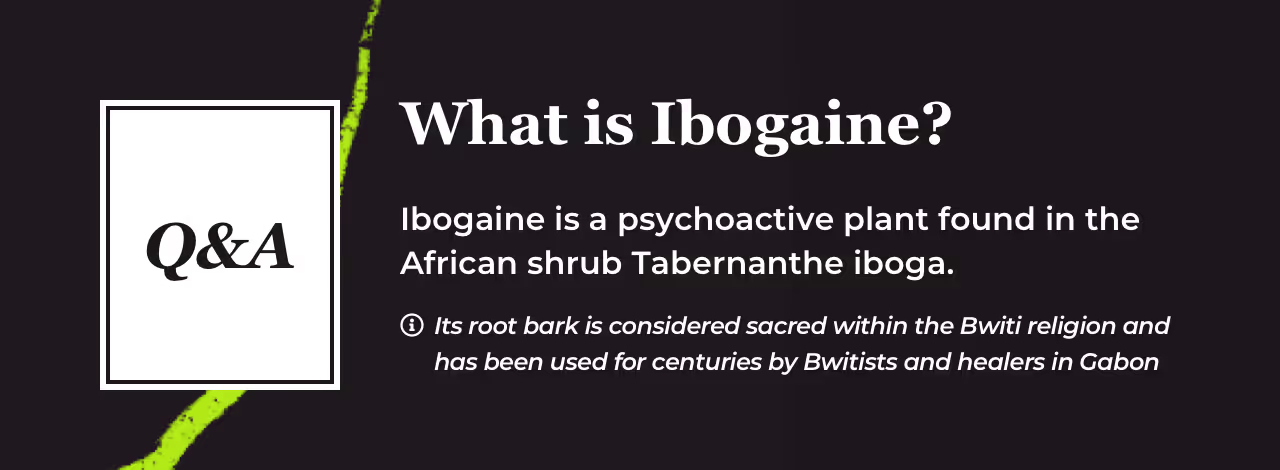
Ibogaine is synthesized from the bark of a rainforest plant. It's been used for centuries by native populations for its ability to create drug-induced hallucinations[1] Some people have hypothesized that these same properties could be useful for those with OUD.
People who take ibogaine report entering a "waking dream state," in which they are able to process prior traumatic events that might be triggering their use of other substances, and in this way aid in recovery.[2]
Since ibogaine is illegal in the United States, people travel to other countries for treatment. One report showed people paying up to $12,000 for their experience, not including travel-related expenses.[3]
.avif)
Is Ibogaine FDA Approved in the United States?
No. The Food and Drug Administration (FDA) has not approved ibogaine as medical therapy for any medical indication at this time, including OUD.
Drugs must move through several stages of study and testing before achieving FDA approval. It's particularly difficult to perform studies with illegal drugs, as attaining a supply is nearly impossible and finding people willing to experiment with illegal treatment drugs raises ethical questions.
Therefore, It would likely be years or decades before the FDA would have sufficient evidence to recommend for or against Ibogaine as a treatment for OUD. [4]
Ibogaine Benefits
Why would people be potentially interested in Ibogaine use? People who use ibogaine cite the following reasons:
- Treatment time: Ibogaine providers tell their clients to expect improvement even with just one dose. It's appealing to think about conquering an opioid use disorder in just a few days (rather than working on recovery for months or years). However, we have no studies supporting this to be true.
- Trauma processing: Many people start taking drugs after a difficult life event or episode. They must work through the thoughts and feelings triggered by that event, and ibogaine seems to make this easier.
- Natural remedy: Many addiction treatment medications are synthesized in labs. People may like the fact that ibogaine is a natural or “non-synthetic” substance.
These are just a few of the reasons people might use Ibogaine.
There are some studies that have been done on Ibogaine, albeit in a very limited capacity. Some research suggests that ibogaine could be helpful in controlled situations:
- In one study, people given ibogaine for OUD had fewer withdrawal symptoms, and about half of them were no longer taking opioids a month later.[8]
- In a separate study, one dose of ibogaine reduced opioid cravings, and that effect lasted for a month or longer.[9]
Again, these studies are small, and researchers have a lot more to learn before formally recommending Ibogaine as a treatment for SUD.
Known Ibogaine Dangers
While ibogaine has limited studies, anecdotal it has been linked to multiple concerning side effects:
Sudden Death
People who took ibogaine in unregulated clinics have died, and forensic experts believe their hearts stopped. Ibogaine can cause unusual cardiac activity, making it potentially dangerous for anyone with underlying heart disease.[5]
Organ Failure
Ibogaine can cause several different types of organ failure, specifically the liver and kidneys. At least one person has died due to multi-system organ failure after taking ibogaine.[6]
Accidents/Injury
Ibogaine is a natural substance, but it's also a powerful hallucinogenic. Any medication that causes hallucinations or altered mental status can cause increase risk for accidents, physical injury, or suicide/self harm. [7]
Alternatives to Ibogaine You Should Consider
Safe and effective opioid addiction treatments that are backed by extensive research exist and are FDA approved here in the United States:
Buprenorphine
Buprenorphine attaches to opioid receptors in the brain, reducing cravings and preventing opioid withdrawal symptoms. Buprenorphine treatment is often combined with naloxone. This combination is known as Suboxone. Suboxone is FDA approved for OUD treatment and is backed by extensive research and safety data.
Methadone
Methadone is another FDA approved, evidence-based treatment for opioid use disorder, including prescription opioid addiction. in the US, it is provided through federally licensed outpatient treatment facilities.
Which Treatment Option Is Right for You?
At Bicycle Health, we offer MAT with buprenorphine/naloxone (Suboxone) to help patients stop or reduce opioid use. As one patient states:
Suboxone, with the help of my medical providers, counselor, and support group, has totally changed my life. I have a home, a stable job, and I get to see my kids every weekend. I’m happy again. Back when I was using, I never could’ve imagined being here… but with the help of my medical team, I’m alive and well today.
Looking for more information on how our evidence-based treatment process can help you in recovery from OUD? Click here to learn more about buprenorphine/naloxone (Suboxone) treatment. For more details on the proven evidence behind buprenorphine/naloxone (Suboxone) treatment, call us at (844) 943-2514 or schedule an appointment here.
- Opioids
- Addiction Treatment
Sources
- Dying to Get Clean: Is Ibogaine the Answer to Heroin Addiction? The Guardian. https://www.theguardian.com/society/2017/dec/10/ibogaine-heroin-addiction-treatment-gabon-withdrawal-danger-death. December 2017. Accessed July 2022.
- Inside Ibogaine, One of the Most Promising and Perilous Psychedelics for Addiction. TIME. https://time.com/5951772/ibogaine-drug-treatment-addiction/. April 2021. Accessed July 2022.
- Americans Going Abroad for Illegal Heroin Treatment. BBC. https://www.bbc.com/news/world-us-canada-43420999. April 2018. Accessed July 2022.
- The Future of Medical Ibogaine. Psychedelics Today. https://psychedelicstoday.com/2019/04/22/future-medical-ibogaine/. April 2019. Accessed July 2022.
- The Anti-Addiction Drug Ibogaine and the Heart: A Delicate Relation. Molecules. https://www.ncbi.nlm.nih.gov/pmc/articles/PMC4382526/. February 2015. Accessed July 2022.
- Ibogaine Treatment for Opioid Use Disorder: What You Need to Know. Healio. https://www.healio.com/news/primary-care/20191205/ibogaine-treatment-for-opioid-use-disorder-what-you-need-to-know. December 2019. Accessed July 2022.
- The Health Risks of Ibogaine Treatment and What Every Ibogaine Provider Should Ask You For. Psychedelic Times. https://psychedelictimes.com/health-risks-ibogaine-treatment-what-every-ibogaine-provider-should-ask-you-for/. November 2016. Accessed July 2022.
- Treatment of Opioid Use Disorder with Ibogaine: Detoxification and Drug Use Outcomes. American Journal of Drug and Alcohol Abuse. https://pubmed.ncbi.nlm.nih.gov/28541119/. 2018. Accessed July 2022.
- Ibogaine Detoxification Transitions Opioid and Cocaine Abusers Between Dependence and Abstinence: Clinical Observations and Treatment Outcomes. Frontiers in Pharmacology. https://www.frontiersin.org/articles/10.3389/fphar.2018.00529/full. June 2018. Accessed July 2022.